Products and configurations to compare
30% greenhouse shade cloth
Preserves more direct light.
Best when: sun-loving crops and moderate climates
Watch for: may not reduce peak summer heat enough
40% reflective greenhouse shade cloth
Current Aluminet reference lists 40% shade with high diffuse transmission.
Best when: mixed greenhouse crops need summer heat relief
Watch for: higher cost than basic black knit
50% greenhouse shade cloth
Use seasonally and monitor plant response.
Best when: seedlings, leafy crops or very intense climates
Watch for: can reduce flowering/fruiting light if left on too long
Shade percentage is not temperature reduction percentage
Ventilation, humidity and outdoor temperature still dominate.
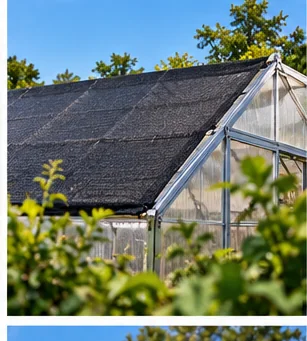
External shade is usually more effective for heat
Stopping solar energy before it enters glazing is better than absorbing it inside.
Reflective cloth changes light quality
Aluminized fabrics reflect and diffuse rather than simply darken.
Crop mix may need zones
Seedling bench can sit under stronger shade while tomatoes receive more sun.
Remove it in winter
Permanent summer shading wastes precious low-angle winter light.
Season extension is a layered system
Shade cloth, frost fabric, bubble insulation, row covers and thermal mass all work by changing heat or light transfer. Their value depends on season. Summer shade can save plants from overheating; the same cloth left on in dark winter weather can reduce the solar gain you desperately need.
Make seasonal layers removable. Clips, tracks or roll-up hardware are worth more than permanently fastening material that is ideal for only three months of the year.
Monitor before and after
A min/max thermometer or logged sensor shows whether the intervention actually changes overnight lows or afternoon peaks. Without measurements, greenhouse climate tweaks quickly become folklore.
Before checkout
- Greenhouse dimensions and approximate volume are measured
- Climate goal is frost-free, cool-season or warm-crop winter growing
- Electrical circuit capacity and GFCI protection are confirmed
- Controller output rating exceeds connected load
- Ventilation has a real intake path, not only an exhaust fan
- Irrigation pressure/filtering matches emitters and tubing
- Light footprint matches the actual bench/canopy
- Seasonal materials can be removed or adjusted
- Replacement parts and consumables are available
- Automation can be overridden manually during a failure
The right upgrade solves the limiting factor
Greenhouses tempt owners to buy equipment one category at a time, but climate is a system. A bigger heater can be wasted through unsealed glazing. A giant exhaust fan can accomplish little without intake area. Perfect drip irrigation can still fail if the filter clogs. Before ordering, identify the variable that is actually leaving the safe crop range: overnight minimum temperature, afternoon maximum, humidity, root-zone moisture or daily light.
Spend first on measurement and failure prevention. A min/max logger, independent thermometer, pressure regulator or simple flow check can reveal that the existing equipment is adequate but badly controlled.
Commissioning the system
Test every automated device before plants depend on it. Force the thermostat above and below setpoint, manually trigger irrigation zones, watch an automatic vent through a warm day, simulate a power interruption where safe, and verify that fans have real intake air. Record the first week of minimum and maximum temperature/humidity so settings can be adjusted from evidence.
Greenhouse systems should also fail manually. Know which plug, valve or vent to operate if the controller loses Wi-Fi, a sensor breaks or a timer sticks. Simpler recovery is more valuable than another dashboard.
Frequently asked questions
Is 50% too much for tomatoes?
It can be depending on climate and season; fruiting crops generally need strong light.
Is reflective shade better than black?
Reflective fabrics can reduce heat gain while diffusing light, but cost more.
Should shade cloth go inside or outside?
Outside is generally more effective for reducing solar heat gain.
Can I layer two cloths?
It is possible but harder to predict/ventilate; one properly chosen layer is cleaner.
Current product/source checks
Affiliate disclosure: GreenhouseGuide.co may earn from qualifying purchases through Amazon Associates and eBay Partner Network at no extra cost to you. Amazon links use scouttheory-20; eBay links use campaign 5339137014.