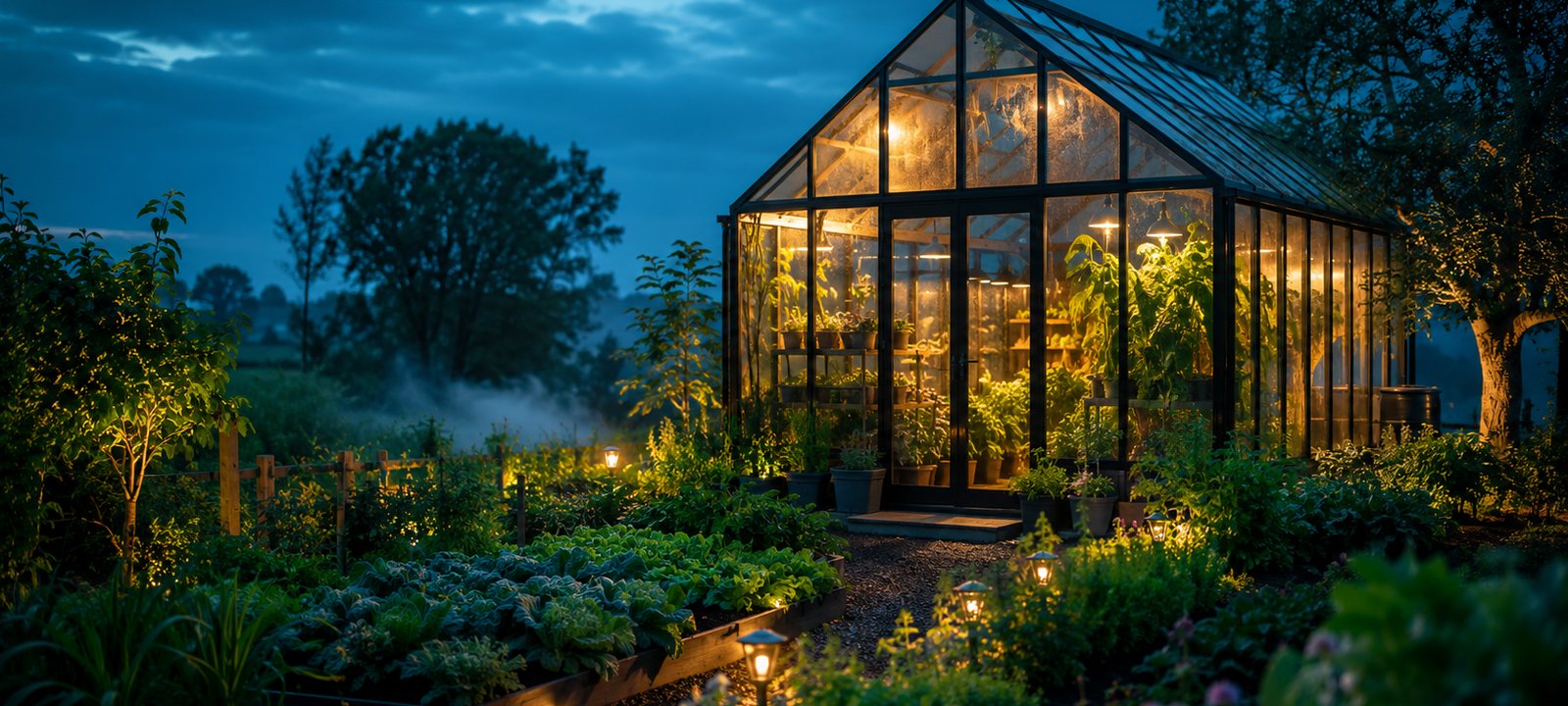
Five decisions stand between you and a thriving greenhouse or grow tent. Work through them in order and you'll skip the expensive mistakes most beginners make.
If you have a yard and want to grow with free sunlight, a greenhouse extends your season at both ends. If space, weather or privacy is limited, an indoor grow tent gives you full control year-round. This single choice shapes everything else.
Be honest about what you want to grow and how much. Greenhouses are almost always outgrown — size up. For tents, work back from plant count: a 4×4 is the flexible sweet spot for most home growers. Don't forget vertical room for lights and fans.
Outdoors, the sun does it — add supplemental lighting only for early seed starting or winter growing. Indoors, a full-spectrum LED matched to your footprint is essential. Size by real wattage (roughly 25–35W per sq ft for flowering), not marketing claims.
This is where beginners stumble. You need moving air above all: an inline exhaust fan plus a small circulation fan. Add heating, monitoring and humidity control as your climate demands. A cheap hygrometer tells you what you're actually working with.
Strong plants begin in the right medium. Use a light, sterile seed-starting mix in heavy-duty trays, warm them on a heat mat, and keep seedlings under bright light so they stay stocky. This is the cheapest, most rewarding way to fill your space.
Five essentials, one link each to go deeper. Tick these off and you're growing.
Start small and finish a single grow before scaling. The lowest-risk entry is either a pop-up greenhouse for the garden, or a 2×2 grow tent with a ~100W LED, a small fan and a tray of seeds indoors. You'll learn the rhythm of light, water and air, then expand with confidence.
It scales enormously. A minimal seed-starting or small-tent setup is an affordable weekend project. A durable polycarbonate greenhouse, or a fully-kitted 4×4 tent with a quality LED, fan, filter and controller, is a larger investment that pays back over years of growing. Our category pages tier every option.
Neglecting airflow. New growers obsess over lights and forget that stagnant, humid air causes mould, weak stems and disease. The cheapest high-impact upgrade in any setup is good ventilation — an exhaust fan and a small circulation fan.